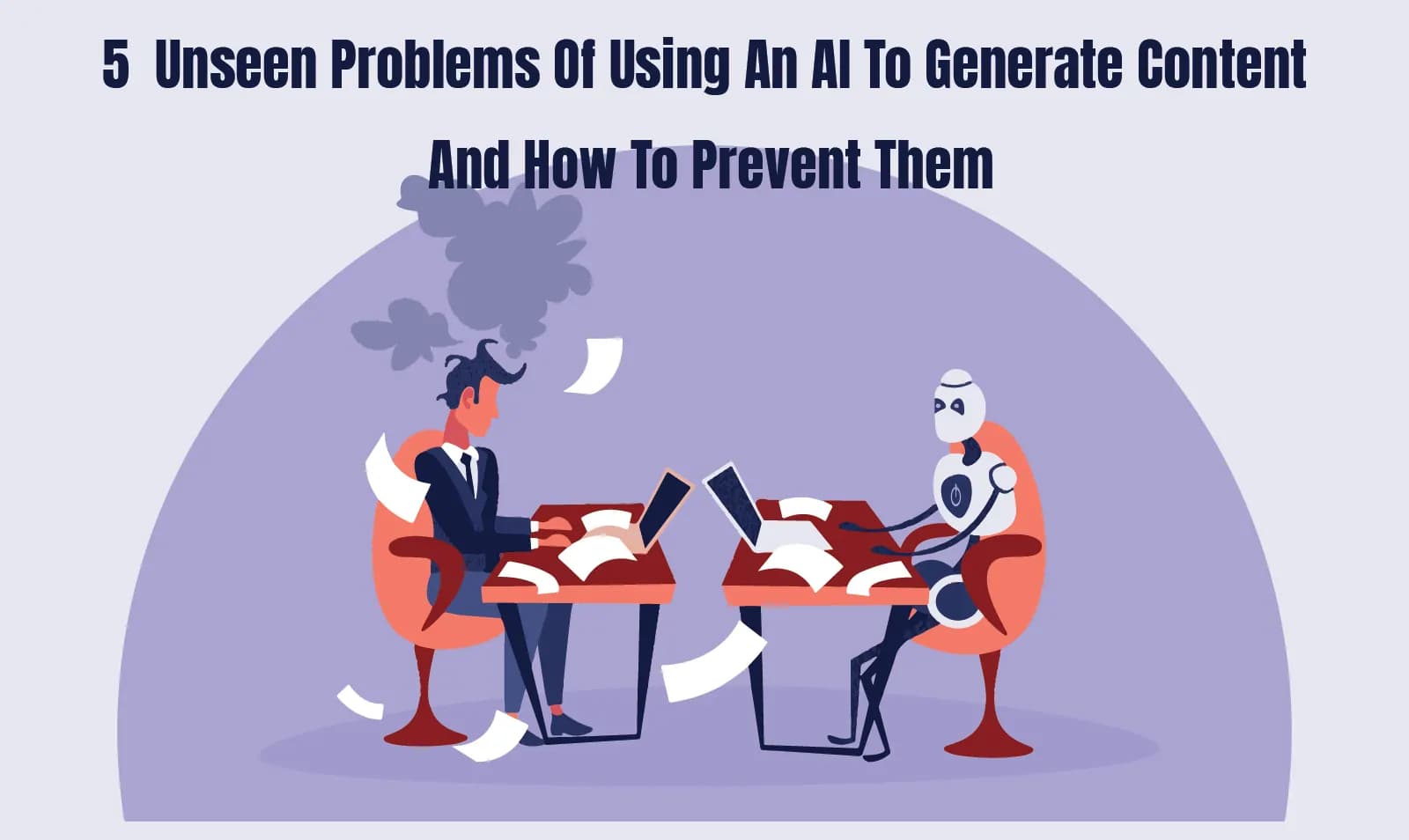
5 Unseen Problems Of Using AI to Generate Content and How to Prevent Them
DIGIDZN26 Aug 20233 min read
In the age of technology, artificial intelligence (AI) has taken significant strides in numerous fields, which include the content era. AI-driven content creation tools have gained popularity for their capability to produce written material quickly and efficiently. However, beneath the surface, there are numerous unseen issues related to the use of AI to generate content. It's critical to recognize those demanding situations and content writing agencies should implement strategies to prevent them from preserving the satisfaction and authenticity of the content produced.
1. Lack of Originality and Creativity: One of the primary concerns when using AI for content generation is the potential lack of originality and creativity in the output. AI operates based on patterns and data it has been trained on, which can result in content that feels formulaic and lacks the uniqueness that human creativity brings. To avoid this problem, it is critical to employ AI as a tool to augment rather than replace human innovation. Digital Marketing Service may start with AI-generated material and then infuse it with their creative ideas, personal experiences, and unique viewpoints to create really original content.
2. Inaccurate or Misleading Information: AI generates content based on the data it has been educated on, and these records might not continually be up-to-date or accurate. There is a risk of producing content that contains outdated statistics, inaccuracies, or even incorrect information. To deal with this problem, it is important to fact-test and affirm the statistics furnished by utilizing AI-generated content. Human oversight is vital to make certain that the content is dependable and straightforward earlier than publishing.
3. Loss of Human Connection: Content that resonates with audiences often includes a human touch that elicits emotions, empathy, and relatability. AI-generated content, on the other hand, may lack the emotional depth that comes from genuine human experiences. To prevent this loss of human connection, writers should review and revise AI-generated content to inject personal anecdotes, emotions, and relatable stories that enhance the overall engagement and contact with the audience.
4. Tone and Style Inconsistencies: Each piece of content has a distinct tone and style that corresponds to the brand's voice and target demographic. AI may have difficulty maintaining a consistent tone and style across an article, leading to a fragmented reading experience. To address this issue, Digital Marketing Services should thoroughly analyze and revise AI-generated content to ensure that it matches the desired tone and style. Maintaining a consistent brand image and providing a smooth reading experience for the audience is critical.
5. Ethical and Sensitive Content: AI-generated content can inadvertently produce material that is ethically or culturally insensitive. AI lacks the understanding of complex cultural nuances and ethical considerations that humans possess. To avoid generating content that might offend or cause harm, it's essential for writers to thoroughly review the content for any potential ethical or cultural issues. Implementing a human review process ensures that the content adheres to ethical guidelines and respects diverse perspectives.
Conclusion
In conclusion, while AI-generated content material offers numerous advantages in terms of performance and pace, it's vital to be aware of the unseen troubles that may get up. Preventing these issues requires a combination of human oversight, creativity, and crucial thinking. Rather than depending solely on AI, it's encouraged to view it as a device that complements human capabilities in place of replacing them. By infusing AI-generated content with originality, accurate statistics, human emotions, consistent tone, and moral concerns, we will harness the power of AI while making sure the high quality and authenticity of the content we produce.