Unraveling AI Hallucinations: The Truth Behind AI’s Misleading Results
DIGIDZN23 Sept 20245 min read
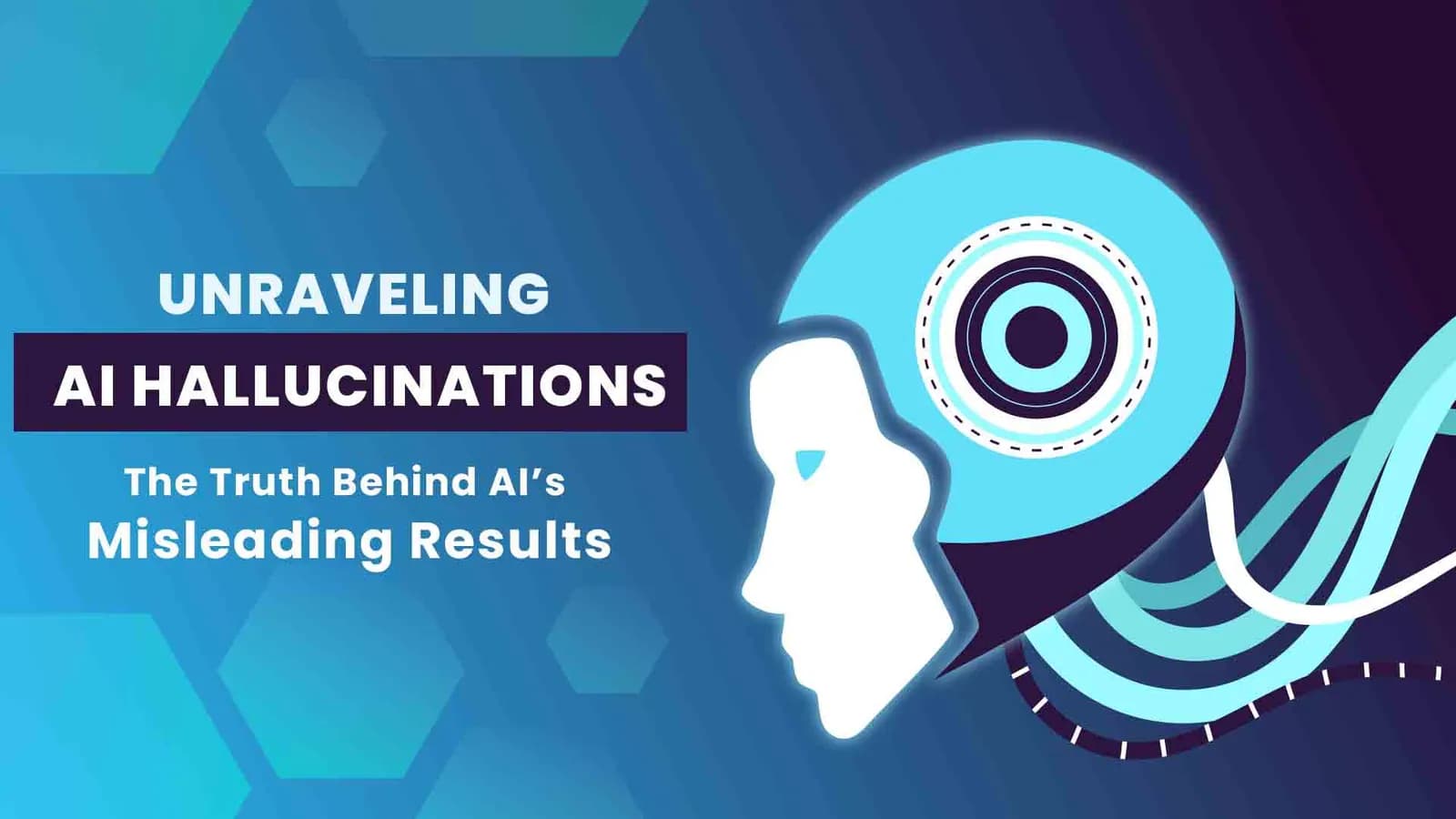
Artificial Intelligence (AI) is shaping the world as we know it, from automating tasks to improving decision-making. However, despite its remarkable capabilities, AI isn’t flawless. A concept known as "AI hallucinations" has surfaced, referring to instances when AI systems produce misleading or incorrect outputs. But what causes these hallucinations, and how can they affect businesses relying on AI-powered solutions, especially those in digital marketing? Let’s dive deeper into this topic and uncover the truth.
What Are AI Hallucinations?
AI hallucinations occur when an AI model generates information that is not grounded in reality or factual data. It’s the machine's version of "making things up," often due to overconfidence in its internal data patterns. This issue becomes particularly concerning in fields where accuracy is paramount, such as in marketing, where businesses like the best digital marketing agency in Delhi or the best social media marketing agency rely on precise insights.
How AI Hallucinations Impact Businesses
Businesses, especially those relying on digital marketing services in Delhi or other regions, depend on AI for data analytics, customer insights, and content generation. However, when AI hallucinates, the generated content or suggestions can mislead decision-making processes. For example, a ppc management agency using AI for keyword research might receive inaccurate data, affecting campaign success.
Causes of AI Hallucinations
- Bias in Training Data: AI systems learn from vast amounts of data. If the training data is biased or incomplete, the model may generate flawed outputs, misleading businesses that depend on AI, like a creative digital marketing agency or an organic SEO agency.
- Overgeneralization: AI models may oversimplify data patterns, leading to generalizations that aren't necessarily true. For example, an internet marketing company may receive SEO advice based on outdated or incorrect trends.
- Ambiguity in Inputs: When an AI model faces ambiguous input, it might attempt to "fill in the gaps" by making assumptions, causing hallucinations. This can have a significant impact on firms like a professional SEO services provider that relies on detailed, factual insights.
Real-Life Examples of AI Hallucinations in Marketing
An example of AI hallucination affecting a social media management agency could be incorrect content recommendations based on trends that never existed. For an internet content marketing company, AI might suggest irrelevant articles or blogs due to misunderstood data.
The Role of SEO in Tackling AI Hallucinations
SEO plays a crucial role in mitigating AI hallucinations. Proper search engine optimization services ensure that AI models access accurate and up-to-date data, reducing the risk of misleading results. For top SEO service providers, using AI tools in combination with human insights helps maintain a balance between automation and accuracy.
How AI Hallucinations Affect Search Engine Marketing
For search marketing companies and those providing search engine marketing services, AI hallucinations can be problematic. Inaccurate data could lead to wasted marketing budgets, ineffective campaigns, and reduced ROI. Thus, businesses must partner with a digital SEO marketing company that understands these risks and implements corrective measures.
Mitigating the Risks of AI Hallucinations
Here are some strategies for reducing the risk of AI hallucinations in marketing:
1. Human Involvement:
No matter how advanced AI becomes, human oversight remains essential. Businesses like the best influencer marketing agency should always ensure that humans verify AI-generated results before acting on them.
2. Use Trusted Data Sources:
Ensuring that AI models are fed reliable data can significantly reduce hallucinations. Top digital marketing agencies like DigiDZN use high-quality data sources to train their AI models.
3. Collaborate with Experts:
Agencies like the best SEO agency and social media content agencies need to collaborate with AI experts to fine-tune AI models and prevent misleading results from affecting marketing campaigns.
The Future of AI in Digital Marketing
Despite the risk of hallucinations, AI continues to evolve, offering remarkable tools for marketers. SEO internet marketing is benefiting from AI-powered keyword research, predictive analytics, and content generation. In the future, AI systems will likely become even more sophisticated, but human oversight will remain essential, especially for content marketing SEO.
Conclusion
AI hallucinations present a real challenge for businesses, especially in the realm of digital marketing services in Delhi and beyond. While AI has the potential to revolutionize marketing efforts, reliance on it without careful scrutiny can lead to misleading outcomes. By understanding the risks and implementing strategies like human oversight and trusted data sources, businesses can leverage AI’s power while minimizing its shortcomings.
FAQs
- What are AI hallucinations?
AI hallucinations refer to instances where AI generates incorrect or misleading information that isn't based on factual data. - How can AI hallucinations impact my digital marketing campaigns?
Incorrect data from AI can lead to poor decision-making in marketing strategies, affecting campaign effectiveness, especially for a search marketing company or paid media marketing. - Can AI hallucinations be prevented?
While they can't be completely eliminated, their risks can be reduced with proper oversight, using high-quality data, and involving human experts. - What industries are most affected by AI hallucinations?
Industries relying heavily on data accuracy, like digital marketing, finance, and healthcare, are most affected by AI hallucinations. - Why is human oversight important in AI-driven marketing?
Human oversight ensures that AI-generated insights are accurate, preventing potential errors that could negatively impact campaigns. - How do AI hallucinations occur in SEO?
AI hallucinations in SEO can lead to inaccurate keyword research or misinterpretation of search trends, affecting rankings. - Can AI be trusted for content creation in marketing?
AI can be a powerful tool for content creation, but it should be used alongside human judgment to ensure accuracy. - What role does data quality play in AI performance?
High-quality, unbiased data is crucial for AI performance. Poor data can result in hallucinations and misleading results. - How do top digital marketing agencies handle AI hallucinations?
Leading agencies combine AI tools with human expertise, ensuring that AI outputs are verified before use. - Will AI improve to the point where hallucinations no longer occur?
While AI is advancing rapidly, it's unlikely that hallucinations will be entirely eliminated. Human oversight will always be needed.